 Hand it off
Furnace carbon monoxide signs in Arizona
Send the request today and stop worrying about who to call.
Most homes in Arizona heat with electricity, but if yours has a gas furnace, a few minutes of knowing what to look for matters more than almost anything else in the house. Carbon monoxide has no smell and no color. The furnace is the one appliance that can produce it and run for hours before anyone notices.
A few signs are worth knowing. Soot around the furnace cabinet or vent. A yellow or flickering burner flame instead of a steady blue one. A smell like something burning, faint and off, when the furnace kicks on. Headaches or nausea that show up when you're home and ease when you leave. Water that streaks down a window near the furnace or collects around the base of the unit. None of these alone means something is wrong, but any one of them is reason to shut the furnace off and have it looked at before you run it again.
If you've noticed something like this, the next step isn't figuring out which company to call, waiting on hold, or explaining the same problem three different times to three different people. You fill out one form and the search for a licensed contractor is no longer something you have to carry. No more scrolling through reviews or comparing quotes against each other at ten at night.
A furnace that might be producing carbon monoxide isn't something to sit with while you shop around. Send the form, and the work of finding someone who can look at it is off your plate.
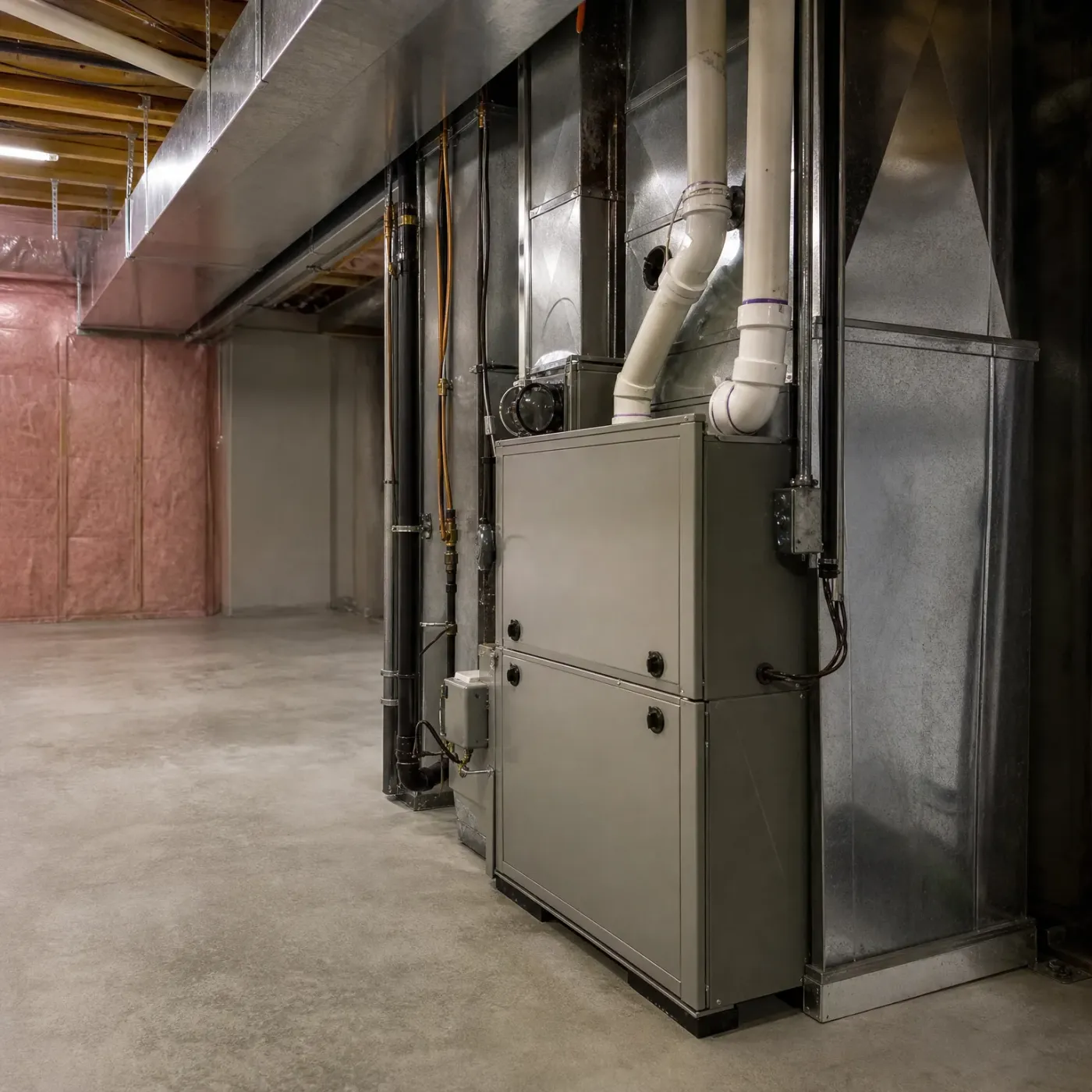
A gas furnace that leaks carbon monoxide usually shows warning signs before anyone gets sick. Look at the burner flame. It should burn blue and steady. A flame that burns yellow, flickering, or orange means the gas is not burning all the way, and that's what produces carbon monoxide. Soot around the furnace cabinet or on the wall nearby is another sign, as is rust or water stains on the flue pipe, since both point to exhaust that isn't venting the way it should. A furnace that makes the air in the house feel stale, or that leaves you with headaches or nausea only when it's running, is pushing exhaust back into the house instead of outside. Because Arizona winters are short and most homes here lean on electric heat, a gas furnace may sit unused for months at a stretch, and whatever went wrong with the venting over the summer won't show up until the first cold morning you turn it on.


Hand off the furnace problem
Fill out one short form instead of calling around.
Send the request and finding a pro stops being your problem.
No fee to send it, and nothing to sign.
Furnace Signs or Body Signs
Signs in the Furnace
- A yellow or orange flame instead of a steady blue one means the burner isn't getting enough air to burn clean.
- Soot marks around the furnace cabinet or the burner compartment point to incomplete combustion inside.
- Rust or water streaks on the flue pipe or where it connects to the furnace often mean exhaust is escaping instead of venting outside.
- A furnace that cycles on and off more than usual, or takes longer to heat the house, can mean the burner isn't running the way it should.
- A smell like something warm and metallic near the furnace is worth checking, even though carbon monoxide itself has no smell.
Signs in You
- A headache that shows up after the furnace has been running a while and fades once you're outside or in another room.
- Feeling drowsy, dizzy, or short of breath mainly in the rooms the furnace heats, not elsewhere in the house.
- Nausea or flu-like symptoms that hit everyone in the house around the same time, with no one actually sick.
- Symptoms that ease up when you leave the house and come back once the furnace has been running again for a while.
- A carbon monoxide detector that goes off near the furnace or in a bedroom down the hall from it.
Why a gas furnace needs air to burn clean
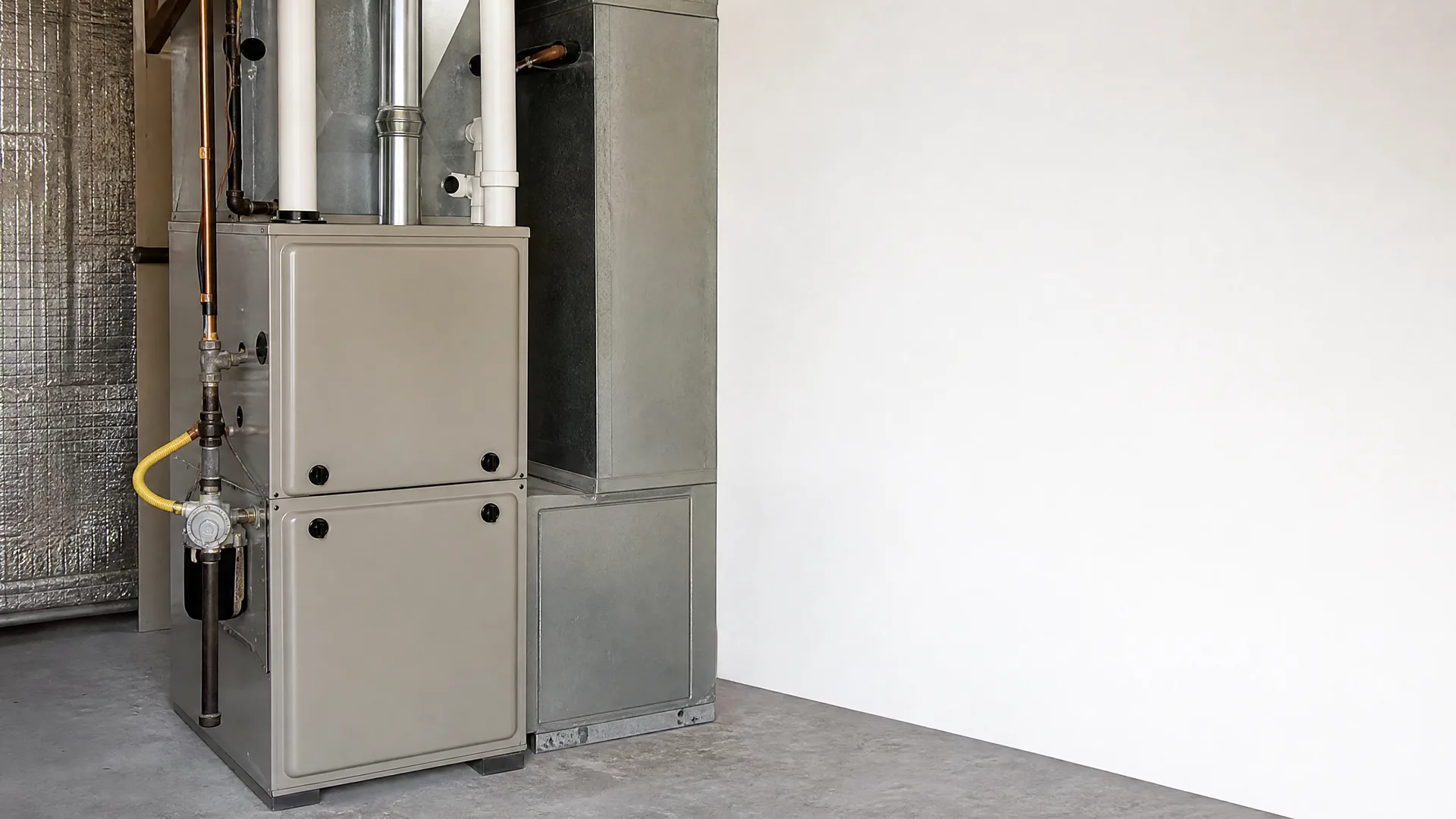
A gas burner needs a set amount of air mixed with the gas to burn all the way to carbon dioxide and water vapor. When something blocks that air, a cracked heat exchanger, a dirty burner, a blocked vent, the flame burns orange or yellow instead of blue, and the leftover gas becomes carbon monoxide. That gas has nowhere to go but into the air the furnace is supposed to be heating.
Where the gas actually escapes
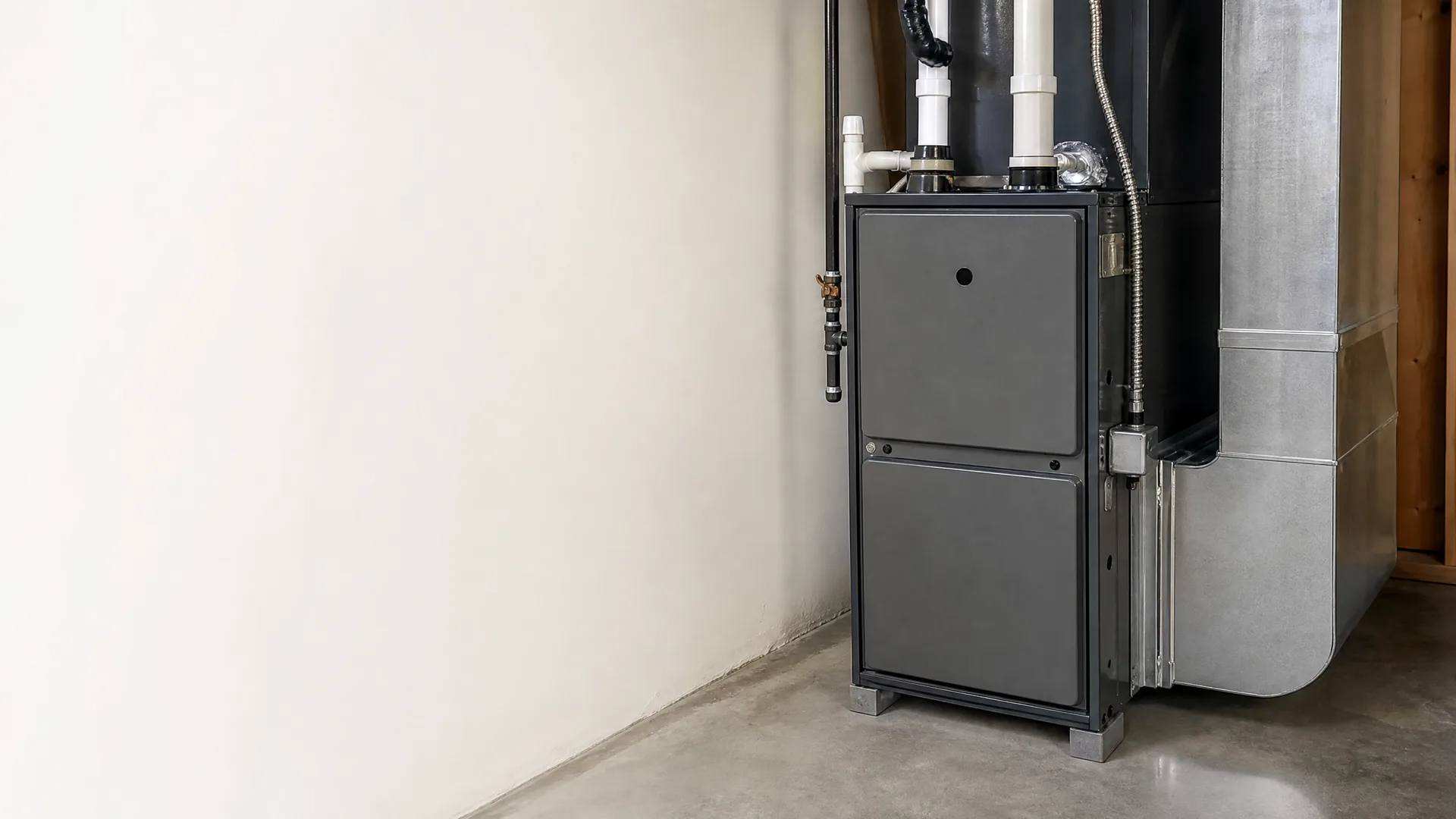
In a working furnace, the heat exchanger keeps the flame and exhaust separate from the air blown into your rooms. A crack in that metal lets exhaust mix into the air your furnace pushes through the house. You cannot see the crack from outside the cabinet, and you cannot smell what comes through it. The flame color and soot marks are what show up on the outside while the real damage sits inside the exchanger.
Winter nights average 39°F statewide
39°F is cold enough that a gas furnace here still gets real use on winter nights, not just an occasional cycle. That's enough run time for a cracked heat exchanger or a dirty burner to put carbon monoxide into the house before anyone notices.
NOAA nClimDiv 1991-2020 county normals weighted by homes

If you noticed any of these signs, don't wait
A furnace with a yellow flame, soot around the cabinet, or rust near the flue is telling you something. So is a headache that only shows up when the furnace is running. Those are the signs. The furnace is the only gas appliance in most Arizona homes that can do this, and a few minutes of looking is what catches it before it turns into something worse.
Finding someone qualified to look at a cracked heat exchanger or a blocked vent takes time most people don't have free on a weeknight. Calling a few HVAC companies, explaining the yellow flame and the soot marks to each one, waiting on quotes, trying to tell which contractor actually works on gas furnaces and which one just lists it on their website. Once you send the form, that search is no longer yours to run.

Send one request and you're done looking
Explain the job once and skip repeating it on every call.