20 to 30 percent indoor humidity
That's typical in an Arizona home once the furnace has been running a while. A tech checking the system during a maintenance visit can confirm it's not something failing.
Skip calling around
Dry air indoors with the furnace running isn't your imagination. Outside air here is already low in moisture, and heating it pulls that moisture down further. This page gets into why that happens and what a furnace checkup can catch before it gets worse, so you're not stuck calling around and repeating the same explanation to one contractor after another.
Skip the callsThe heat isn't adding dryness, it's exposing it. Arizona air outside is already low in moisture, and when your furnace warms it, the relative humidity drops even further, the same way heating any parcel of air lowers its percentage of moisture without changing the actual amount in it. There's no humidifier built into most furnace setups here, because for most of the year nobody needs one. So the dry feeling in your nose, skin and the static in your carpet is just that outside air, warmed up, with nothing added back. It means the dryness isn't a sign anything is wrong with your furnace. But it's worth having the system checked anyway, since a furnace working harder than it should, from a dirty filter or a cracked heat exchanger, can affect air quality in other ways that do matter.
Cold desert air enters your furnace already low in moisture
The burner heats that air before the blower pushes it out
Heating the air drops its relative humidity without adding dryness
Dry warm air moves through your ducts into every room


That's typical in an Arizona home once the furnace has been running a while. A tech checking the system during a maintenance visit can confirm it's not something failing.
A maintenance visit looks at airflow and burner condition together, the two things that decide whether your furnace is pulling rooms drier than the desert air outside already does.
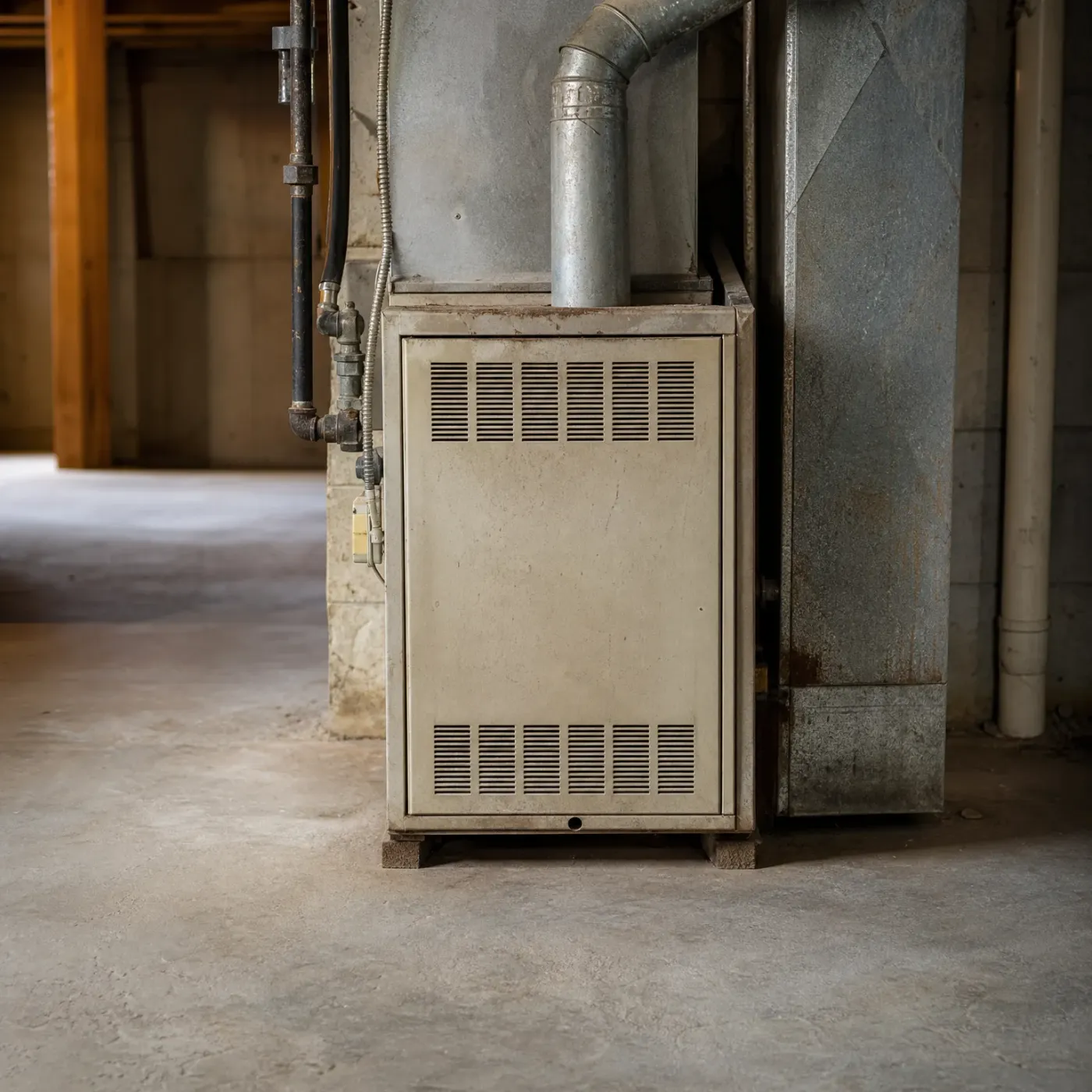
Static shocks on doorknobs, lips that crack by evening, wood furniture joints loosening up. Houseplants need water more often even though you haven't moved them. A piano or guitar can go out of tune faster than it used to. None of this means your furnace is broken. It means the air moving through your ducts is as dry as the desert outside, maybe drier if the system isn't running clean. A maintenance visit checks whether the furnace itself is adding to it.
A furnace with a dirty filter or a failing heat exchanger has to work harder to push the same air through your house, and that shows up on your power bill. It also means more dust circulating, since a clogged filter stops catching what it should. Left long enough, a cracked heat exchanger is a safety problem, not just a comfort one. Catching it during a maintenance check costs far less trouble than catching it after something fails in the middle of winter.




A furnace that's never been looked at can still run all winter without quitting on you, so it's easy to assume it's working fine.
Running fine and running clean aren't the same thing. A furnace can heat every room and still be burning poorly enough to pull your air drier than it needs to be.
39°F is the average low across your state's winter nights, but indoors your furnace is pushing air much warmer than that through dry rooms for hours at a stretch. That gap is what you're feeling on your skin and seeing on your plants.
NOAA nClimDiv 1991-2020 county normals weighted by homes
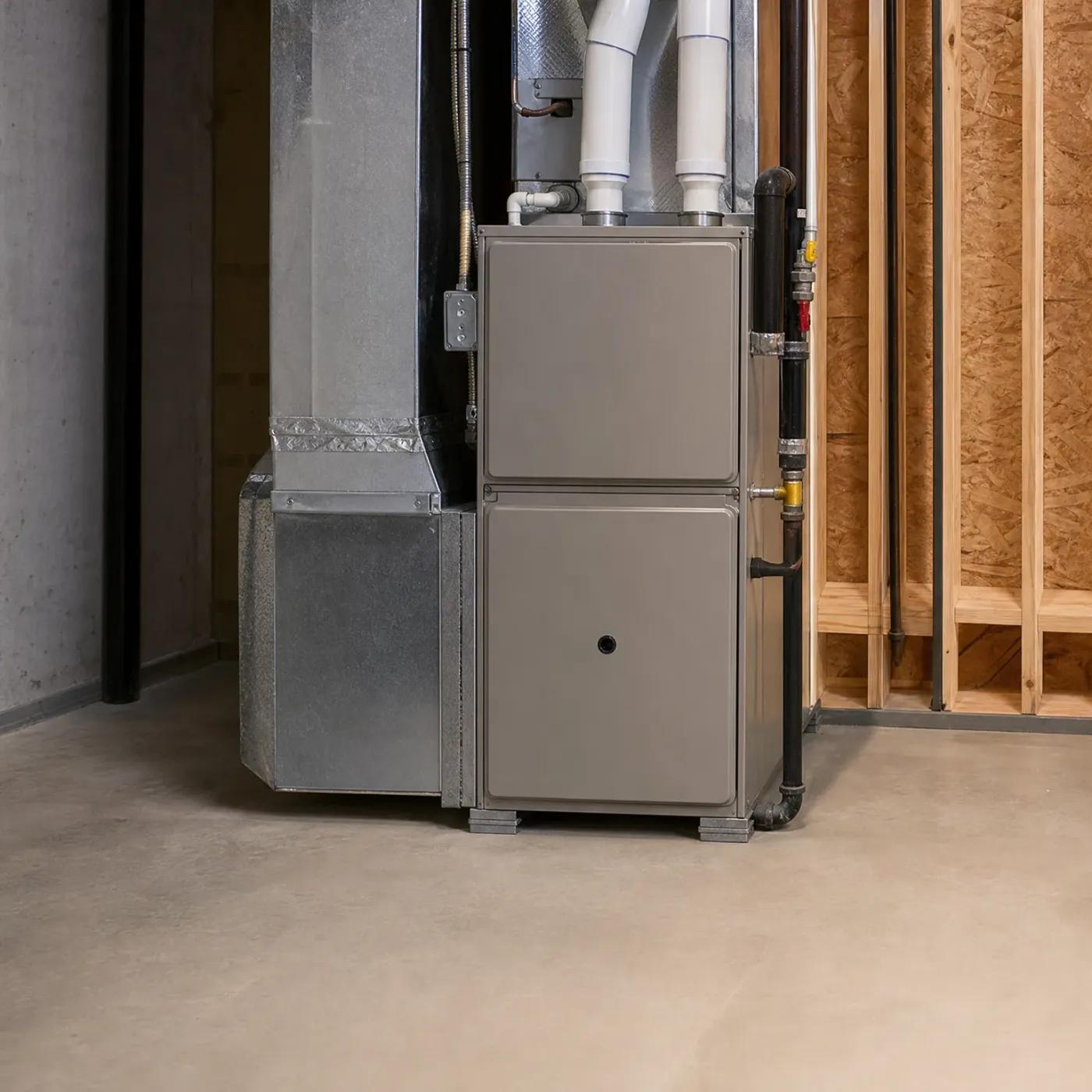
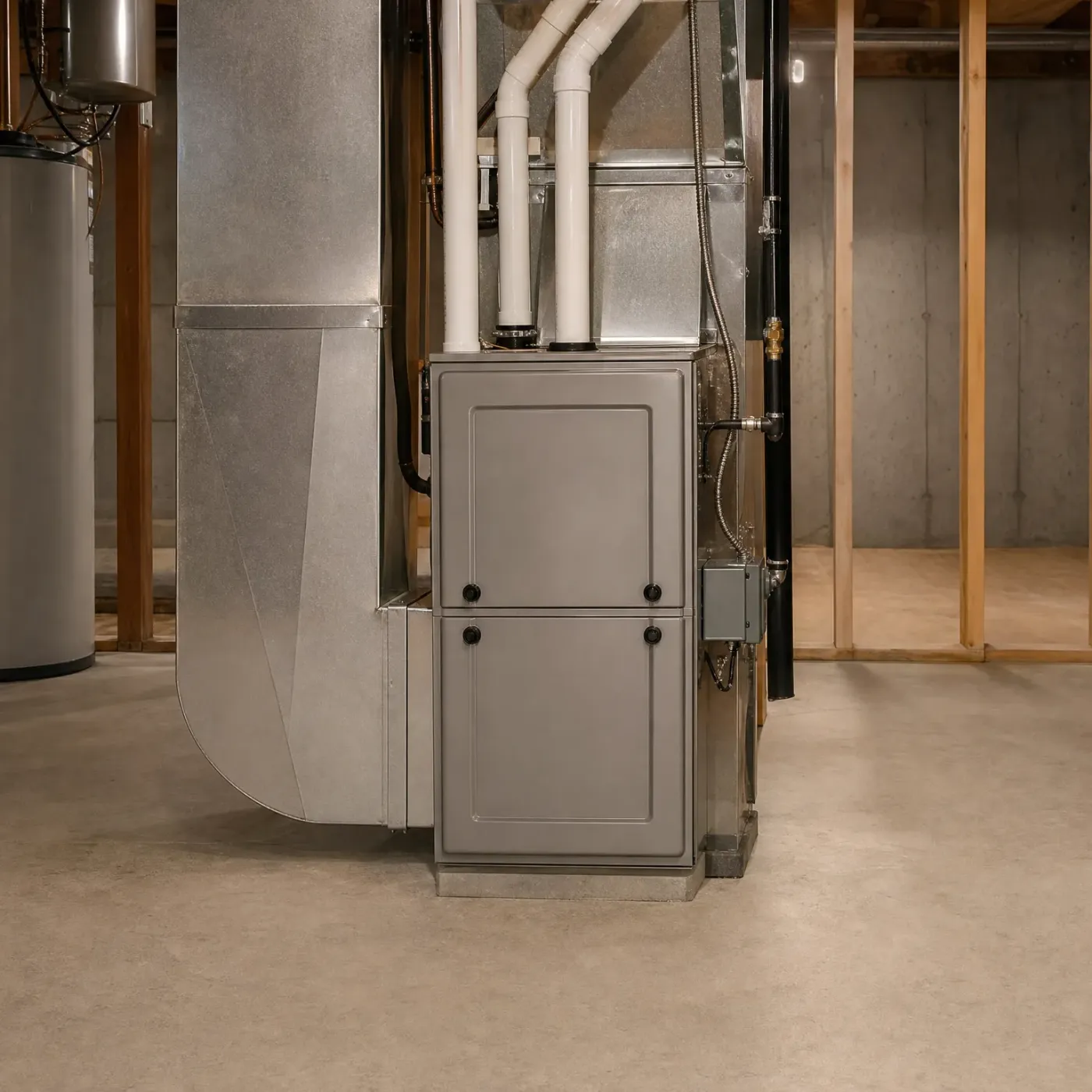
This one has clean lines, tight connections, and ductwork that isn't straining to move air. A furnace like this burns efficiently and heats rooms without working any harder than it has to. A maintenance visit confirms it's set up this way and keeps it that way.
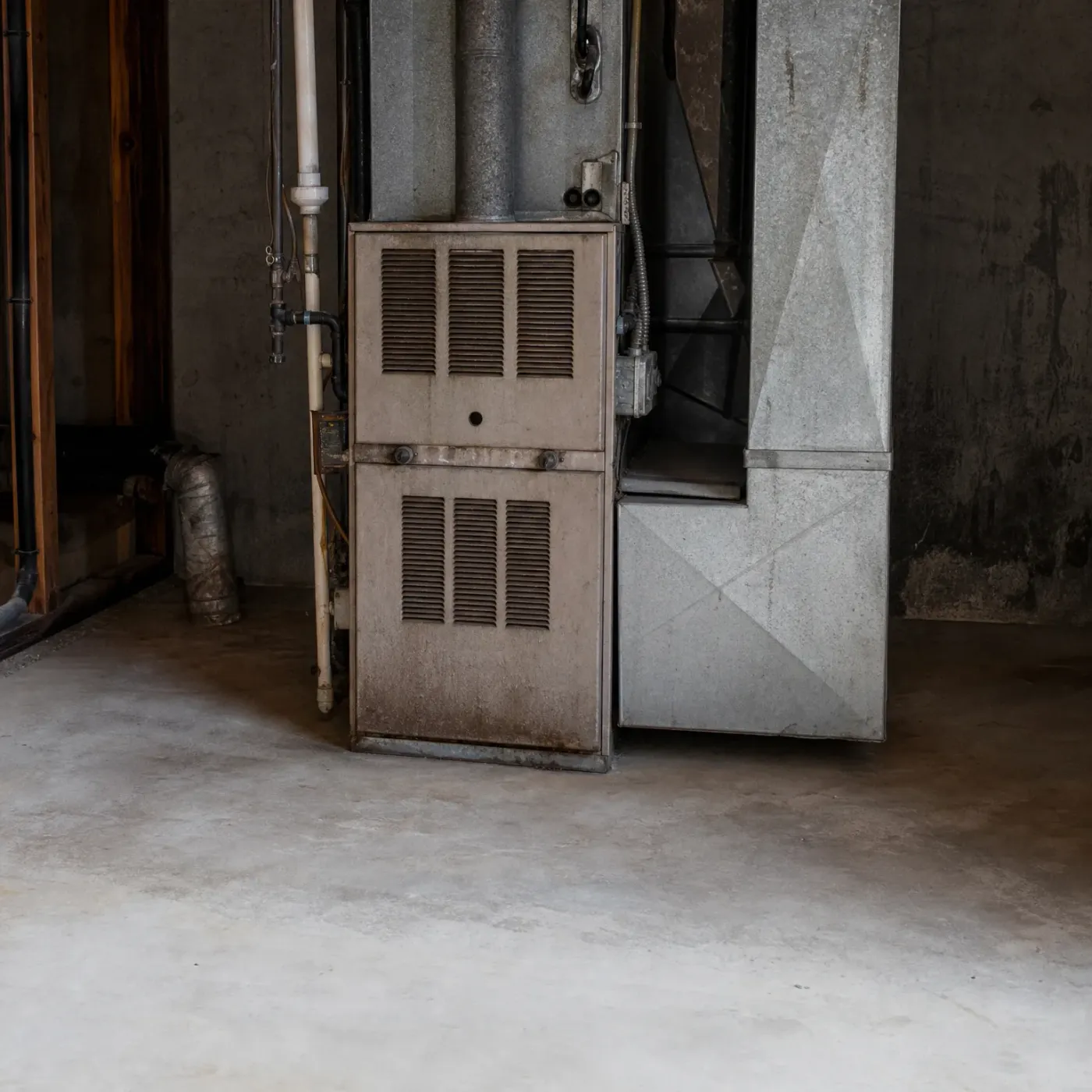
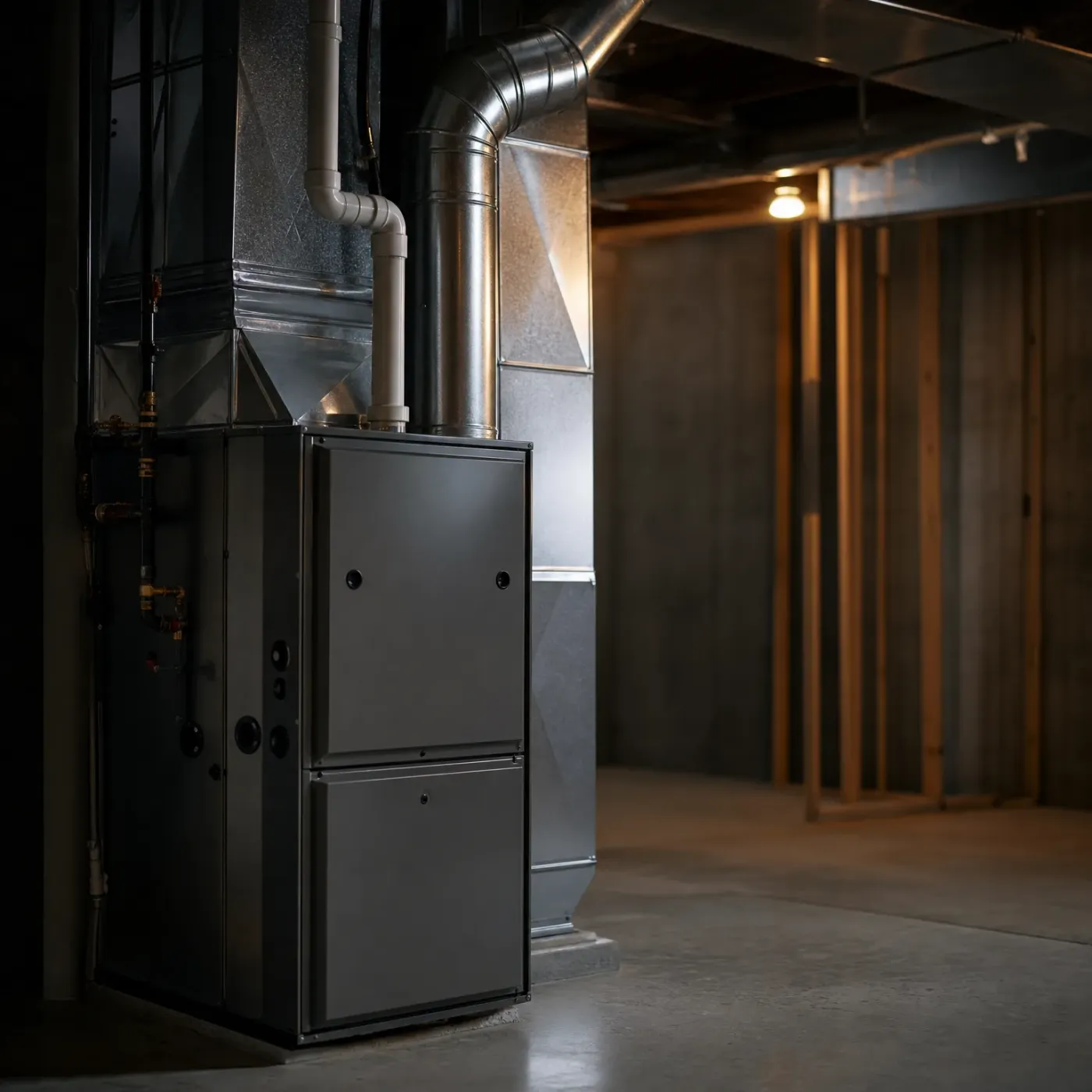
Corrosion on the cabinet, moisture staining on the walls around it, pipes that have seen better days. A furnace in this shape is more likely to be burning poorly or losing airflow it needs, which pulls rooms drier than the desert air outside already does.
You might notice it first thing in the morning, your throat dry before you even get out of bed. Skin feels tight. Nosebleeds show up more than they used to, especially in kids. Static builds up enough that you feel it on every doorknob and light switch. None of that means your furnace is broken. But if it's running harder than it needs to, because the filter is clogged or the burner isn't tuned right, it can pull your home drier than the desert air outside already does. Left unchecked, that strain adds up on the furnace itself, and the dryness keeps wearing on you and the house around you.
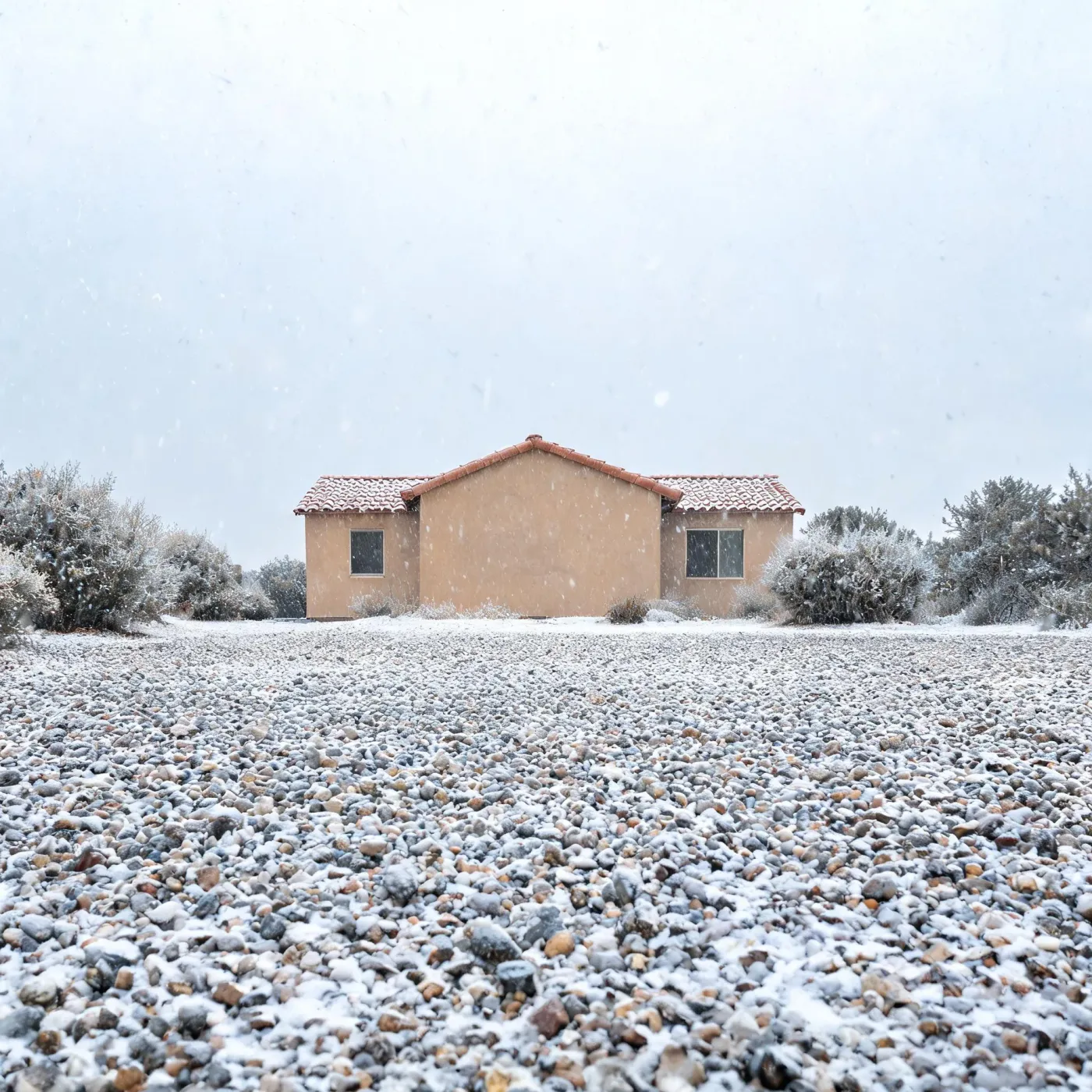
Winter nights across Arizona average 39°F, according to NOAA climate data, but your thermostat is calling for a lot more than that, and your furnace has to work to close that gap. The harder it runs, the more it dries the air moving through your ducts, which is why the driest stretches in your house tend to line up with the coldest nights outside. A tech who services furnaces in your area through the winter sees this pattern on nearly every visit and knows where a system tends to lose efficiency first. One licensed local contractor takes the call, checks the burner and airflow, and tells you straight whether the dryness is normal for the season or a sign the furnace is working harder than it should.
NOAA nClimDiv 1991-2020 county normals weighted by homes
Only one pro gets your request, so you hear from one company.
You only hire the pro if you want to.
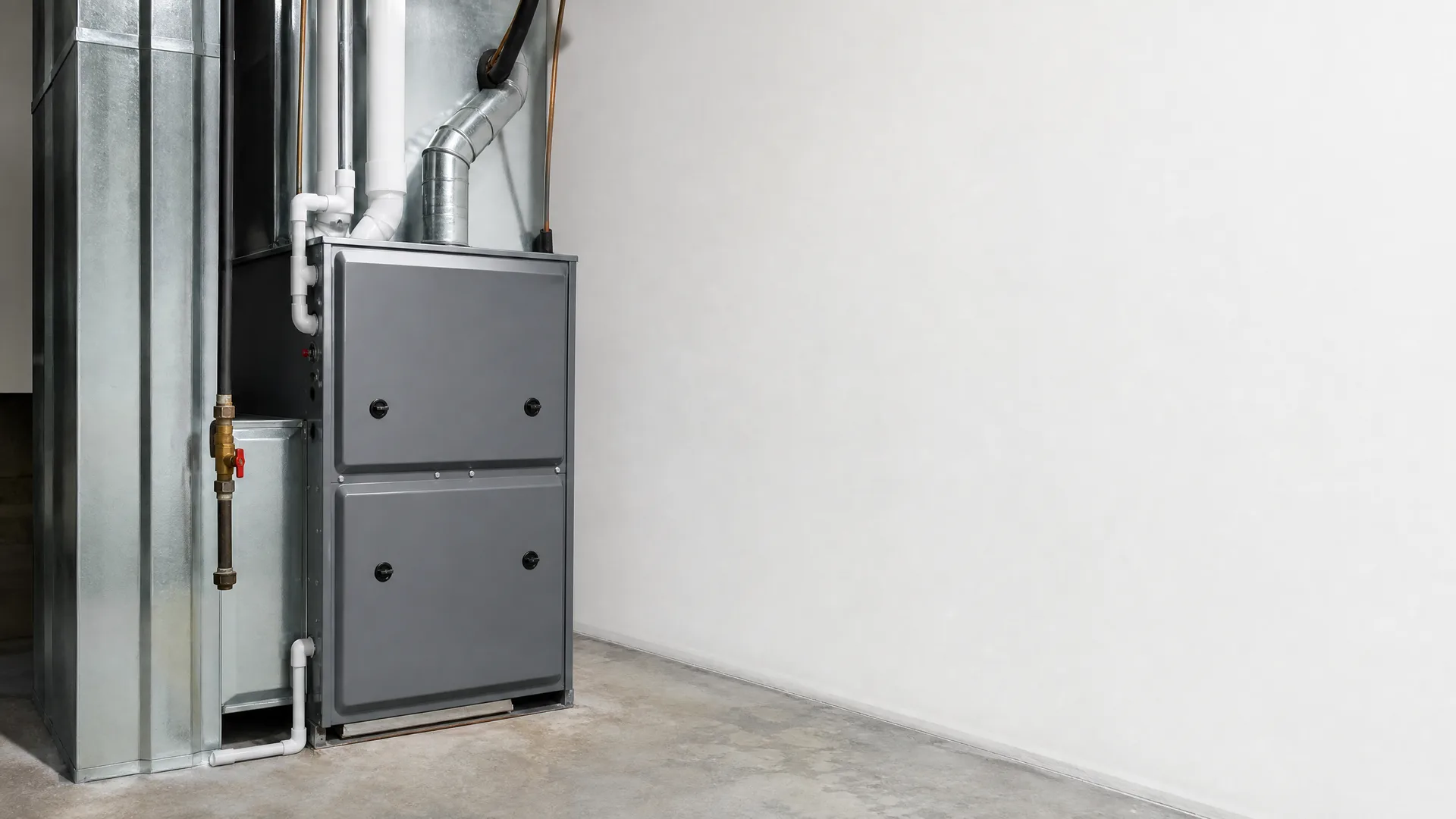
Nobody's looked at the burner or the filter since last winter, maybe longer. Dust has built up on the flame sensor. The filter's pulling harder than it should. None of that shows up as a breakdown, so there's no reason to think about it. But a furnace working harder than it needs to is pulling more moisture out of the air it heats, and that shows up as drier rooms than you'd otherwise have.
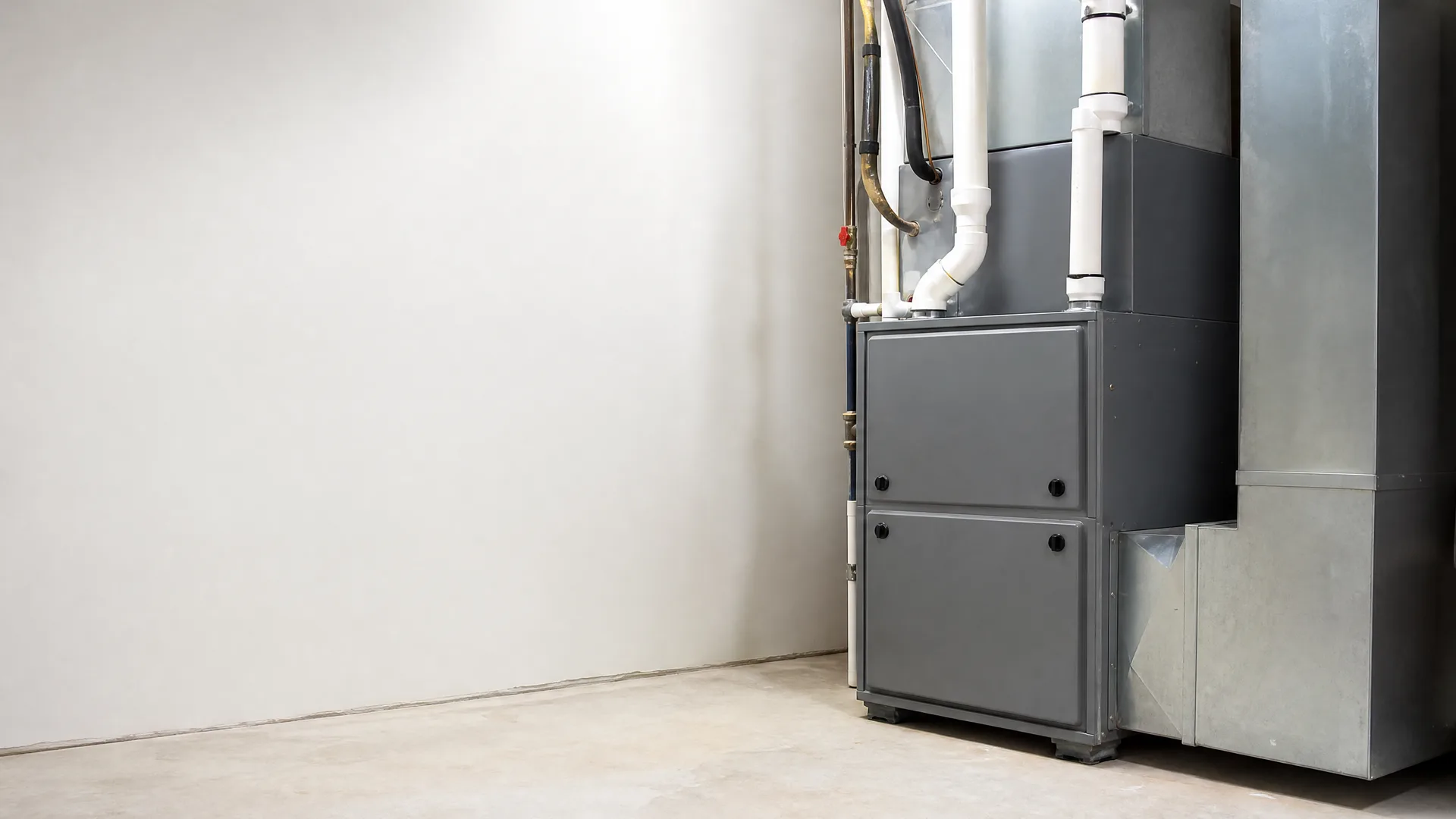
A tech who works on furnaces all over your area every winter knows what to check first: the filter, the burner, the connections at the heat exchanger. One visit confirms the system's burning clean and moving air the way it should. It won't put moisture back into your house, that's not what a furnace does, but it rules out the system itself as the reason your house feels drier than it has to.
You went looking for a thicker filter or a bigger one thinking it might help with the dryness, or maybe you already swapped one in and the house still feels the same. It's a fair question. Filters get blamed for a lot of furnace problems, and it's worth knowing whether the size or thickness of the one you're using has anything to do with how dry the air feels once the heat's been running.
A filter's job is to catch dust and debris moving through your ducts. It doesn't add or remove moisture from the air either way, no matter how thick it is or how high its rating. The dryness comes from heating already-dry Arizona air, not from anything the filter does or fails to do. Where filter size does matter is airflow. One that's too restrictive, or one that's clogged and overdue for a change, makes your furnace work harder to push air through the system. A tech checking the filter during a maintenance visit is really checking airflow and strain on the blower, not humidity. The dryness you're noticing is separate from that, and a bigger filter won't touch it either way.
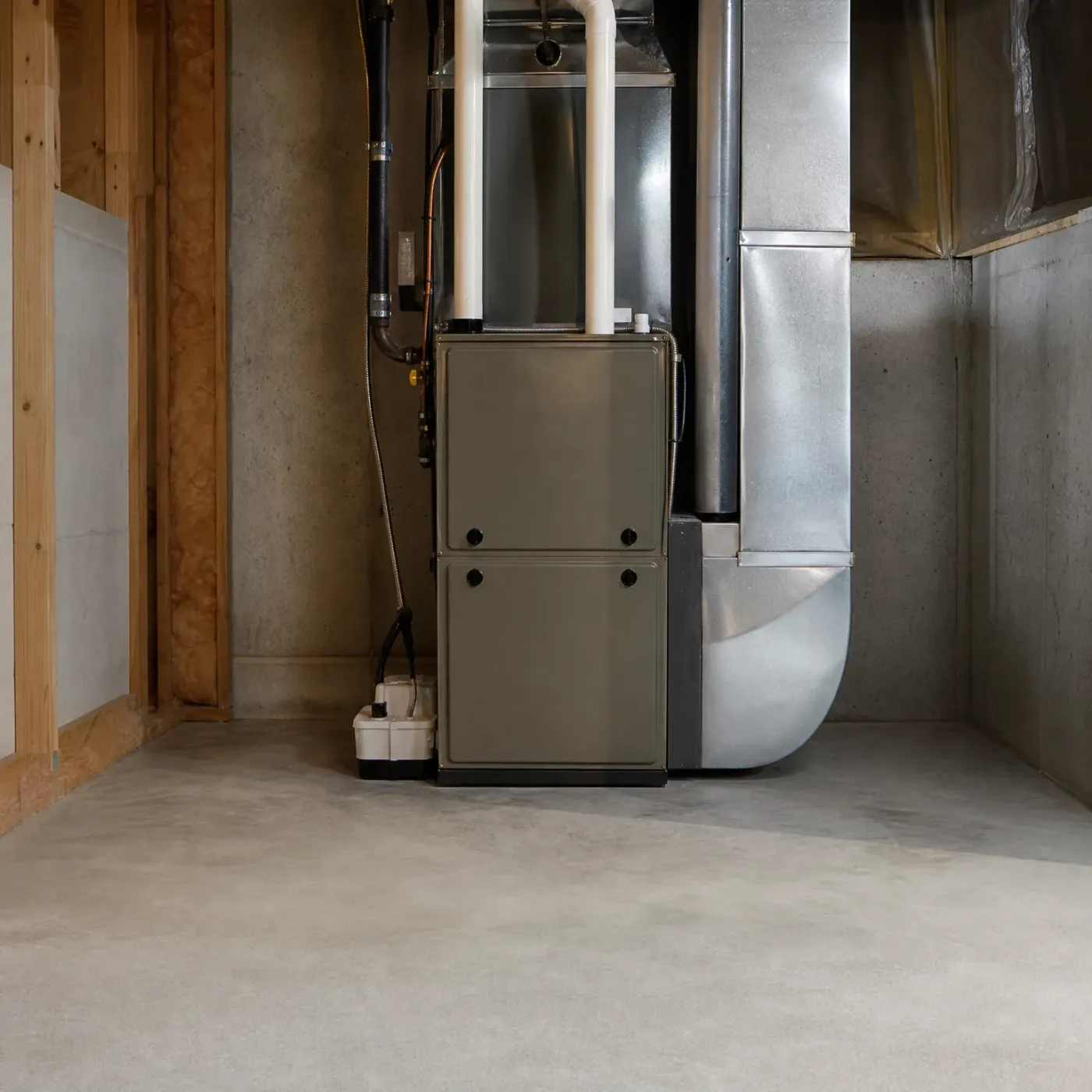
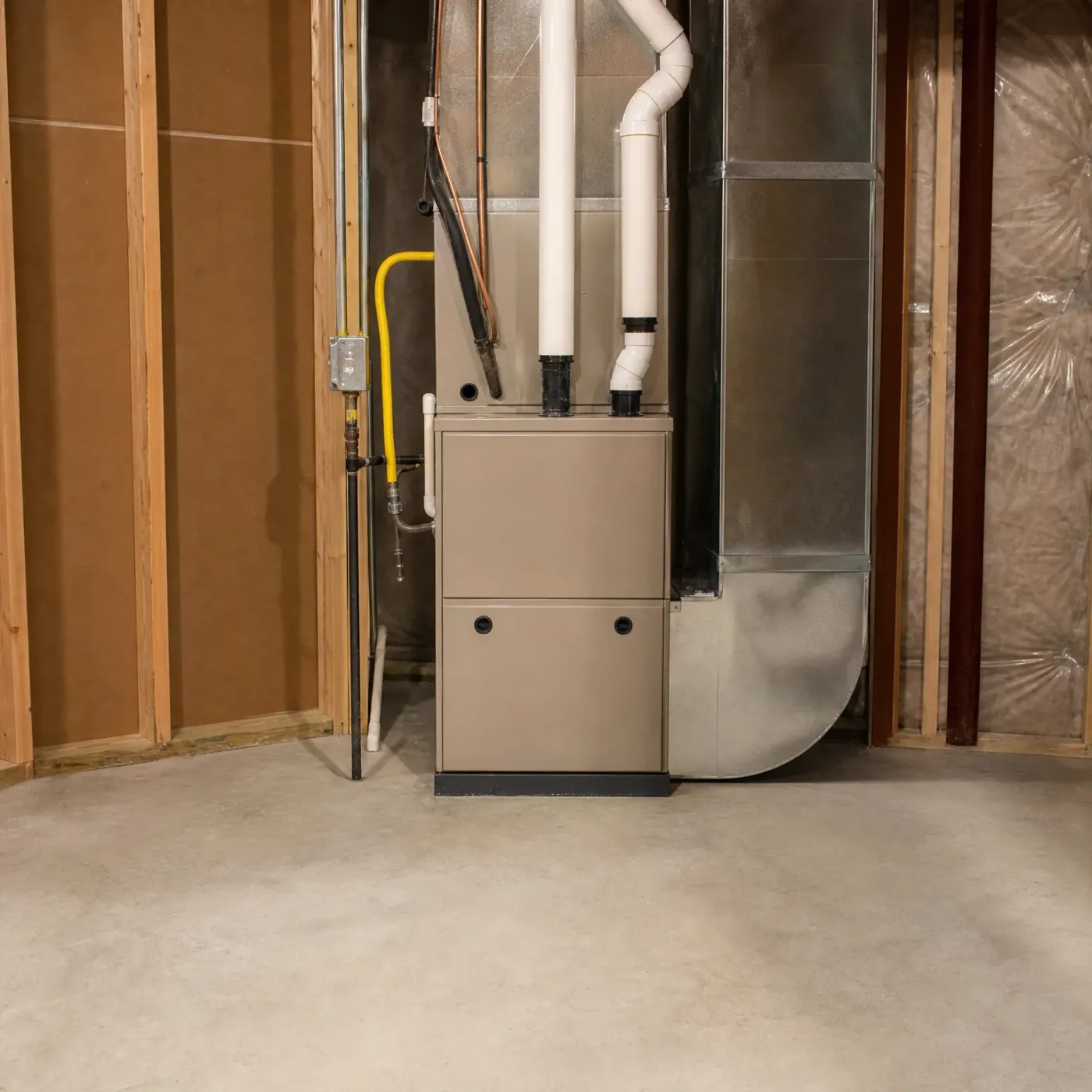
This is what a clean setup looks like: tight flue connections, ductwork that isn't straining, a condensate pump draining the way it should. A furnace like this burns efficiently and only pulls the air as dry as the desert outside already is. Nothing here is working harder than it needs to.
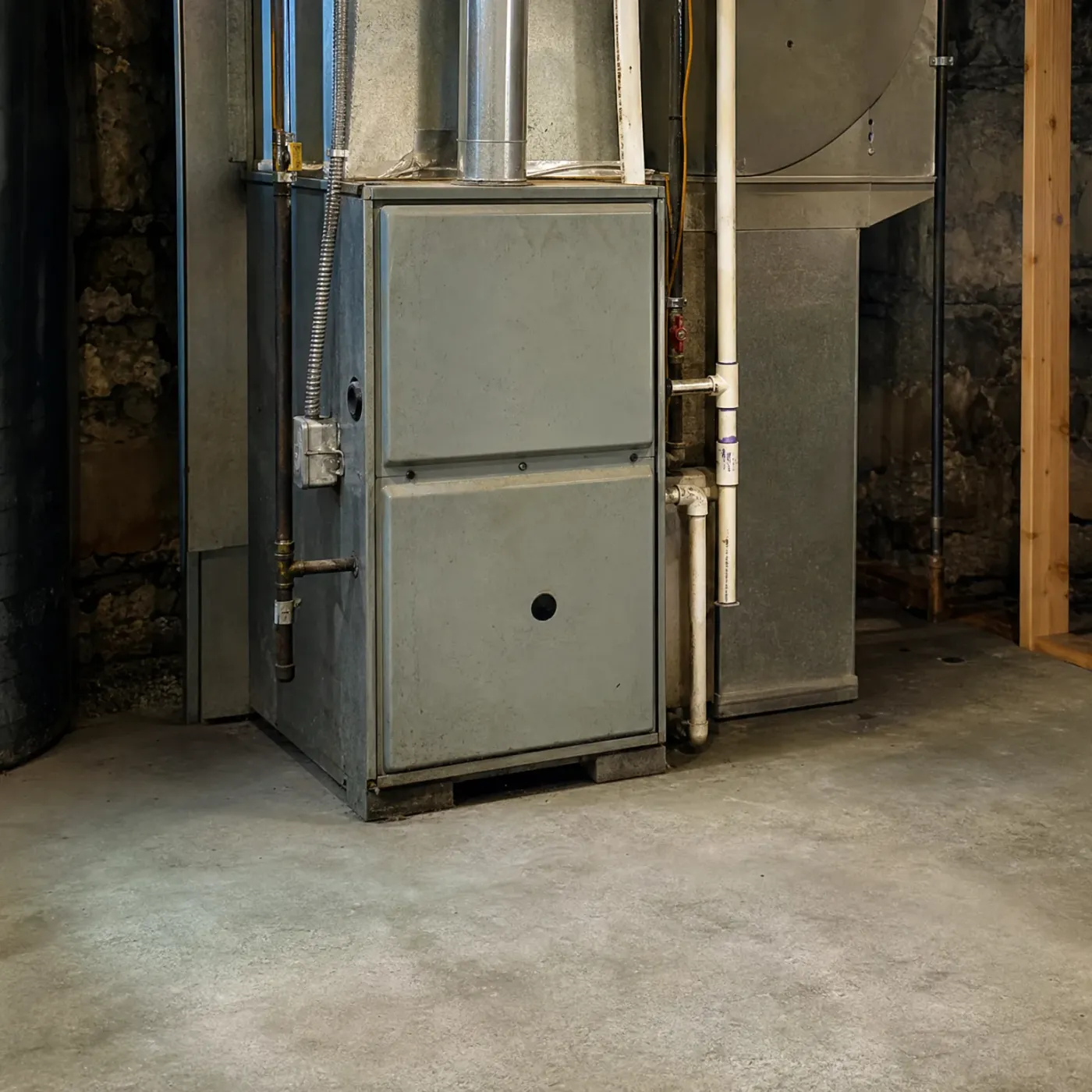
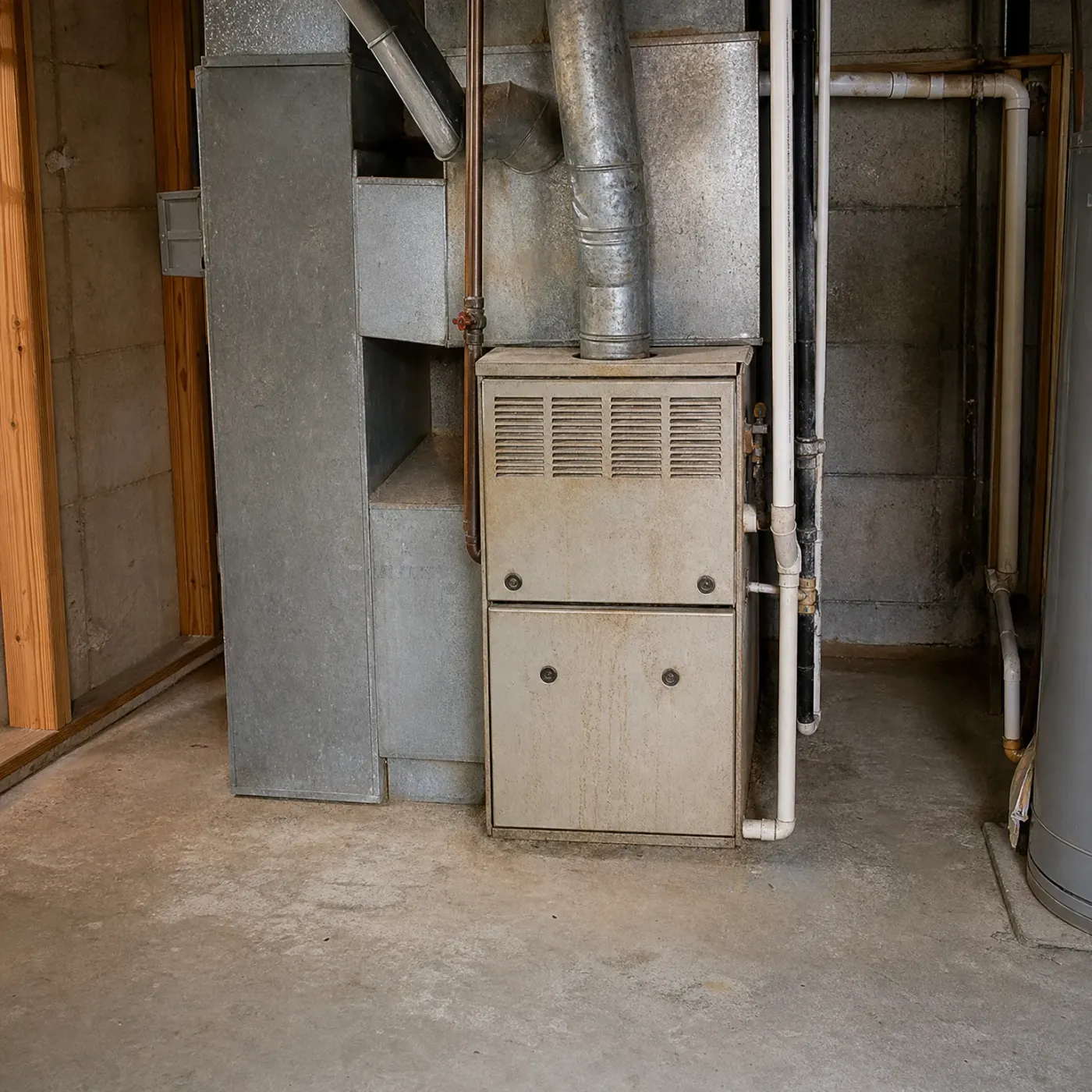
Older stone and block basements like this one hide problems easily. Gas lines, flex tubing, and condensate pipes all crowd a furnace that hasn't been looked at in a while. A clogged filter or a cracked heat exchanger in a setup like this can pull your rooms drier than the air outside ever would on its own.

Your furnace didn't cause the dryness. It's pulling in air that was already dry outside and heating it, which drops the humidity further, the same as it would in any house in this state. A furnace that's burning clean and moving air the way it should won't make that worse. One that's neglected, a dirty flame sensor, a filter that's overdue, a crack in the heat exchanger, can pull rooms drier than the desert outside already does. A maintenance visit is how you find out which one you're living with.
You could spend an evening calling furnace companies, explaining the dry air and the static shocks to each one, and waiting on quotes to compare. Or you could have a licensed technician local to your part of Arizona, someone who checks these systems every winter and knows what tends to fail first in this climate, look at yours directly. One visit answers the question instead of guessing at it.

One form, no calling around