Tell us about the job
Takes about a minute. No obligation.
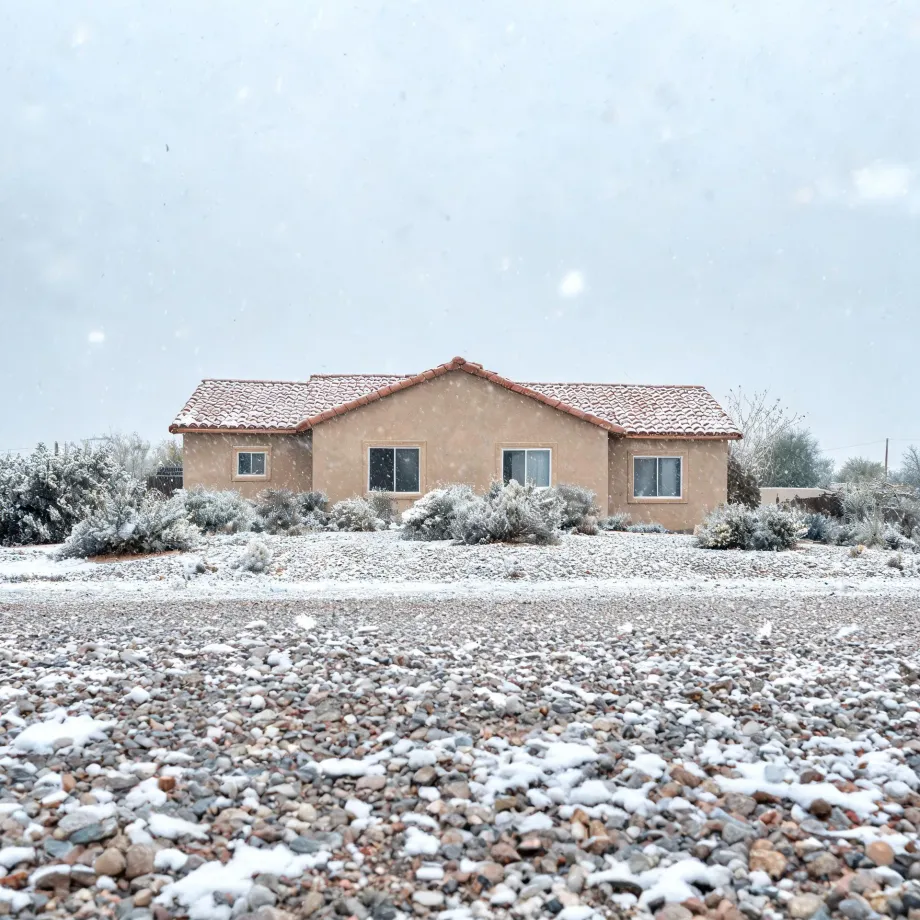
Sizing a furnace for this county starts with how many months the burner actually cycles. Homes in Greenlee County, AZ run heat about seven months a year, from October through April. The heat exchanger and ignition system accumulate wear across every one of those months, and a unit that is even slightly undersized works harder on cold mornings, which means it runs longer cycles and reaches its stress limits sooner. A contractor doing the load calculation here has to account for the full duration the equipment will be firing, not just how cold a single night might get. Ductwork sealing and static pressure matter too, because a furnace fighting a leaky distribution system carries that extra load across the whole season.
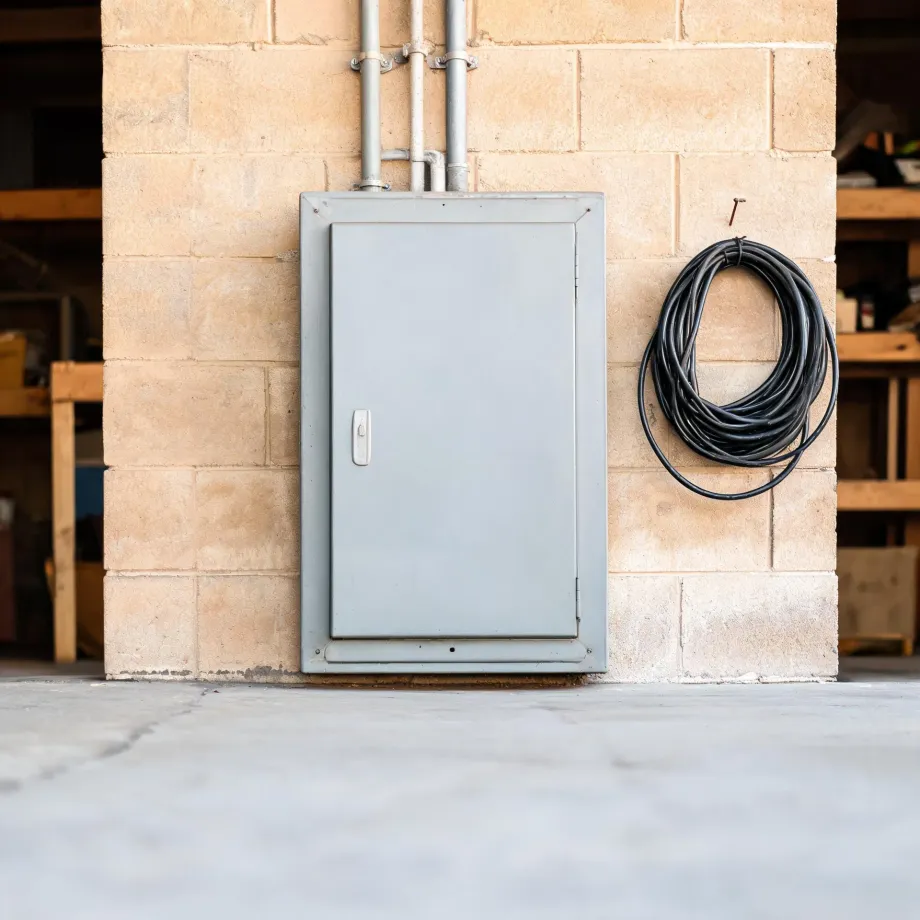
Ductwork laid out for an earlier generation of heating equipment carries its own geometry: trunk sizes, branch runs, and register placements that fit what was common then, not what a contractor brings to the job today. Half the homes in Greenlee County, Arizona were built in 1980 or earlier (2020-2024 ACS 5-year). That means the duct layout in a sizable share of local homes was designed around a system that is no longer in it, and a contractor sizing a new furnace has to assess whether that existing network will distribute heat the way the new unit expects. If it will not, the duct work becomes part of the job before the furnace itself is even priced.
What a Furnace Installation Covers
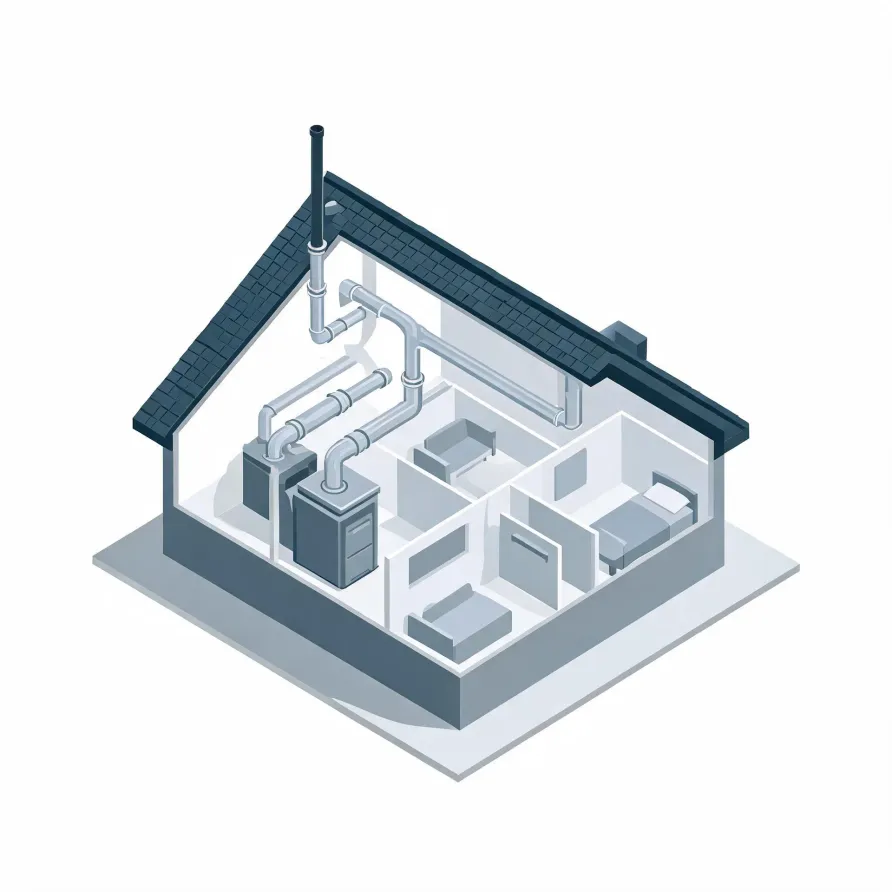
The furnace itself sits in a utility room, basement, or closet and is the piece that generates heat. A flue or vent pipe runs from the furnace to an exterior wall or roof, carrying combustion gases out of the house. These are the two pieces a homeowner is most likely to notice during the work.
The air handler or blower moves conditioned air out through the supply side and pulls return air back in, and it mounts directly on or near the furnace cabinet. A thermostat goes on an interior wall and is the control point for the whole system. A contractor also connects the furnace to the gas line and to the home's existing return and supply trunks.
The drawing shows a typical layout, and a licensed contractor determines exactly what applies to this house.
Find a contractor in Greenlee CountyGreenlee County, by the numbers
41 severe weather events were recorded in Greenlee County, Arizona between 2015 and 2024.
NOAA National Centers for Environmental Information, Storm Events Database, bulk CSV export, events 2015-01-01 through 2024-12-31.Half the homes in Greenlee County, Arizona were built in 1980 or earlier (2020-2024 ACS 5-year).
U.S. Census Bureau, 2020-2024 American Community Survey 5-Year EstimatesGreenlee County, Arizona holds 4,433 housing units (2020-2024 ACS 5-year).
U.S. Census Bureau, 2020-2024 American Community Survey 5-Year EstimatesOwners occupy 53.0% of the occupied homes in Greenlee County, Arizona (2020-2024 ACS 5-year).
U.S. Census Bureau, 2020-2024 American Community Survey 5-Year EstimatesCodes & Standards Governing Furnace Installation in Greenlee County, Arizona5 sourced rules and standards
What the Installation Actually Looks Like
Non-weatherized gas furnaces manufactured on or after November 19, 2015 must reach 80.0 percent AFUE.
Non-weatherized oil-fired furnaces manufactured on or after November 19, 2015 must reach 83.0 percent AFUE.
Mobile home gas furnaces manufactured on or after November 19, 2015 must reach 80.0 percent AFUE.
Non-weatherized gas furnaces manufactured on or after December 18, 2028 must reach 95.0 percent AFUE, up from the 80.0 percent minimum that applies to units manufactured before that date.
Licensing Rules in Greenlee County, Arizona
Arizona requires a contractor licence in good standing: it is unlawful to engage in the business of contracting, to bid, or to act or hold yourself out as a contractor without one.
Severe Weather Events in Greenlee County
Weather puts a workload on heating equipment that mild climates never demand. A furnace sized and installed for what Greenlee County actually experiences will hold up differently than one spec'd without that context.
41 severe weather events, 2015–2024. Source: NOAA National Centers for Environmental Information, Storm Events Database.