Tell us about the job
Takes about a minute. No obligation.
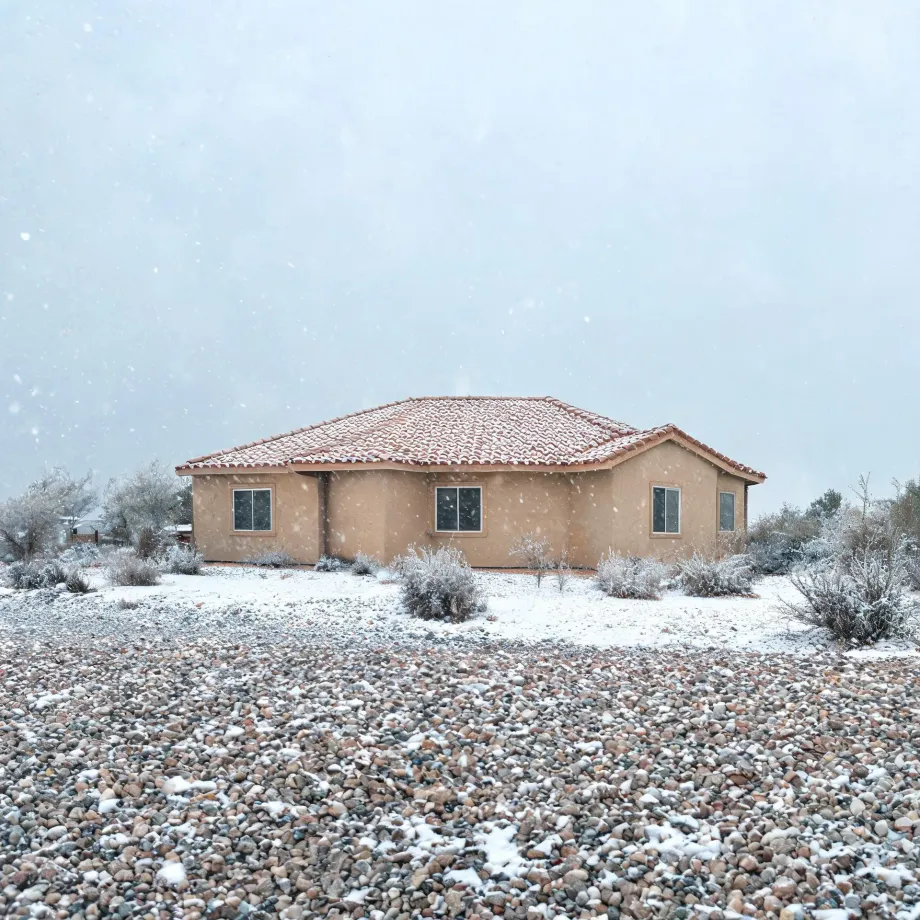
Sizing a furnace for a Coconino County home is a local question, not a catalog exercise. Homes in Coconino County, AZ run heat about eight months a year, from October through May. The burner, the heat exchanger, and the ignition system cycle through that entire stretch, and a unit that was undersized or poorly sealed at installation carries the deficit through every one of those months. A contractor quoting a replacement here has to account for that load when selecting equipment and specifying duct connections, because a marginal install that might hold elsewhere will show fatigue sooner when the idle season is as short as it is here.
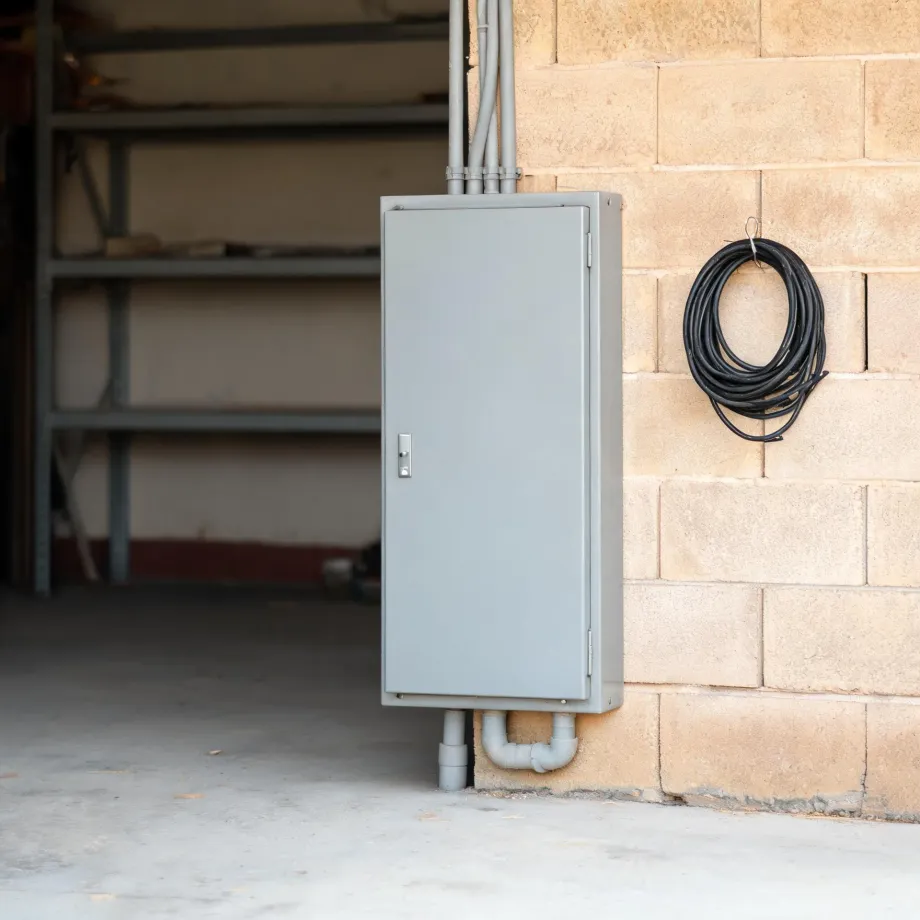
Ductwork in this county's older homes was laid out for furnaces with different output profiles than what a new unit delivers, and that mismatch is where an installation job gets complicated. Half the homes in Coconino County, Arizona were built in 1991 or earlier (2020-2024 ACS 5-year). A contractor fitting a new furnace into that stock has to assess whether the existing duct runs can handle the airflow a current system pushes, and whether the electrical service will carry the load. If either falls short, the fix goes beyond swapping the unit.
What Gets Installed With a New Furnace
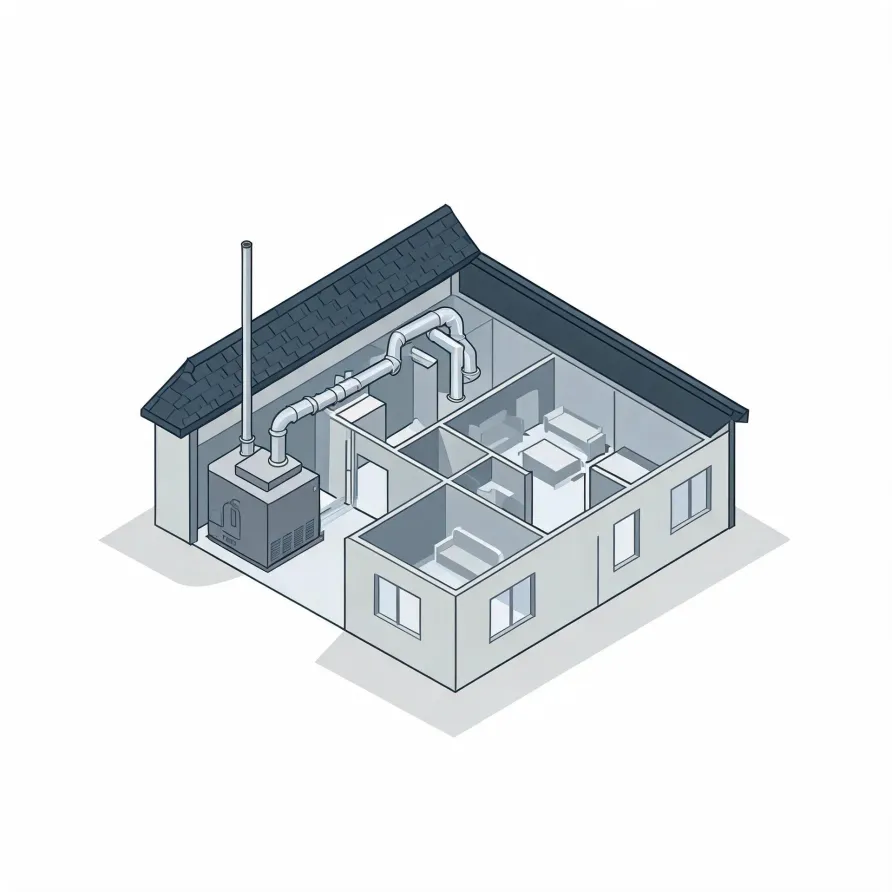
The furnace itself sits in a utility space, basement, or closet near the center of the house and burns fuel or runs electricity to produce heat. The air handler, which may be part of the same cabinet, moves that heated air outward. These are the pieces a homeowner buys when replacing an old system.
The flue pipe runs from the furnace to an exterior wall or roof and carries combustion gases out of the house. The thermostat mounts on an interior wall and gives the homeowner control over when the system runs. A contractor also connects the furnace to the existing supply and return registers so conditioned air reaches every room.
The drawing shows a typical layout, and a licensed contractor determines exactly which components apply to your home and how they connect.
Find a contractor in Coconino CountyCoconino County, by the numbers
396 severe weather events were recorded in Coconino County, Arizona between 2015 and 2024.
NOAA National Centers for Environmental Information, Storm Events Database, bulk CSV export, events 2015-01-01 through 2024-12-31.Half the homes in Coconino County, Arizona were built in 1991 or earlier (2020-2024 ACS 5-year).
U.S. Census Bureau, 2020-2024 American Community Survey 5-Year EstimatesCoconino County, Arizona holds 70,645 housing units (2020-2024 ACS 5-year).
U.S. Census Bureau, 2020-2024 American Community Survey 5-Year EstimatesOwners occupy 59.7% of the occupied homes in Coconino County, Arizona (2020-2024 ACS 5-year).
U.S. Census Bureau, 2020-2024 American Community Survey 5-Year EstimatesCodes & Standards for Furnace Installation in Coconino County, Arizona5 sourced rules and standards
What the Installation Actually Looks Like
Non-weatherized gas furnaces manufactured on or after November 19, 2015 must reach 80.0 percent AFUE.
Non-weatherized oil-fired furnaces manufactured on or after November 19, 2015 must reach 83.0 percent AFUE.
Mobile home gas furnaces manufactured on or after November 19, 2015 must reach 80.0 percent AFUE.
Non-weatherized gas furnaces manufactured on or after December 18, 2028 must reach 95.0 percent AFUE, up from the 80.0 percent minimum that applies to units manufactured before that date.
Licensing and Legal Requirements in Coconino County, Arizona
Arizona requires a contractor licence in good standing: it is unlawful to engage in the business of contracting, to bid, or to act or hold yourself out as a contractor without one.
Severe Weather in Coconino County
Extreme weather puts direct pressure on heating equipment: hard conditions demand more run time, stress components, and shorten the gap between installations. What furnaces face in Coconino County shapes what size, spec, and setup make sense here.
396 severe weather events, 2015–2024. Source: NOAA National Centers for Environmental Information, Storm Events Database.