Tell us about the job
Takes about a minute. No obligation.
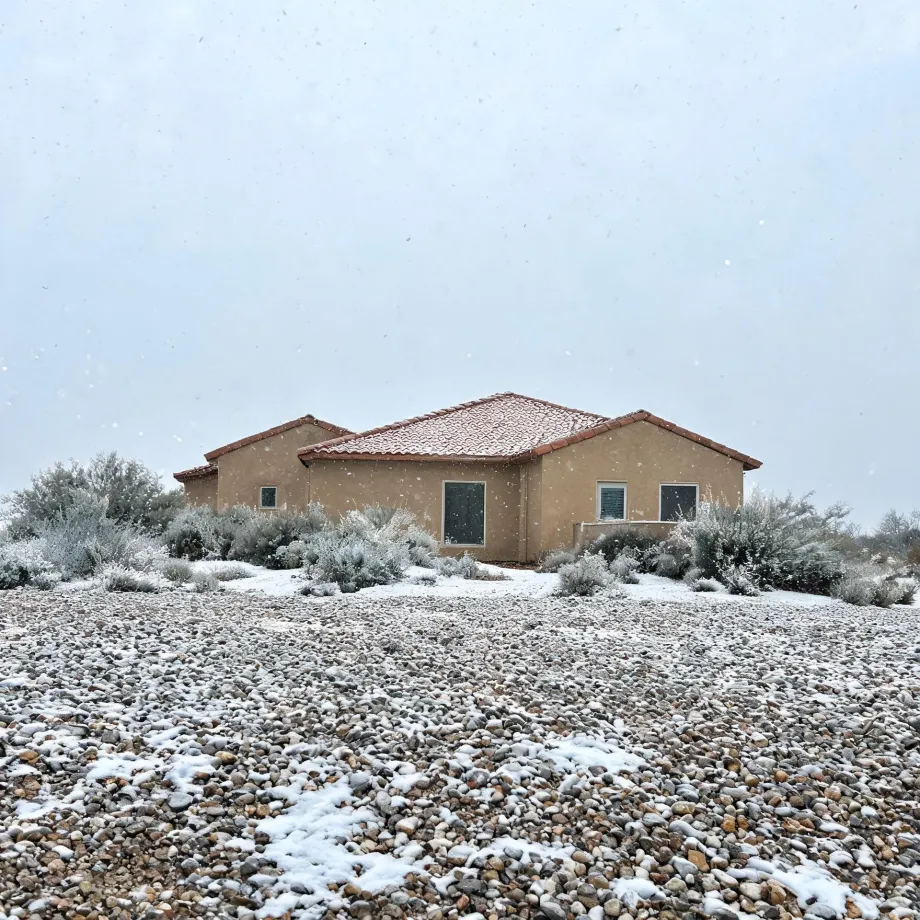
A furnace repair call in Yavapai County almost always arrives with a history behind it. Homes in Yavapai County, AZ run heat about seven months a year, from October through April. The burner, heat exchanger, and ignition system cycle on and off across those months, and that repeated cycling is what wears the parts that fail most often. When a contractor opens the unit, cracked igniters, heat exchanger fatigue, and blower wear are what they find because the load those parts have been carrying is real and sustained. A fault that shows up in February has usually been building since October.
Furnace repair in housing this old is decided inside the cabinet. Half the homes in Yavapai County, Arizona were built in 1995 or earlier (2020-2024 ACS 5-year). A unit running in a house from that era has often outlasted one or two prior service cycles, and the heat exchanger, burner assembly, and control board each accumulate wear that only shows once a contractor removes the panels and inspects directly. A cracked heat exchanger looks the same from outside as a dirty one. That distinction changes whether the repair is a cleaning and a tune, or whether the furnace comes out entirely.
The Parts of a Furnace a Contractor Checks First
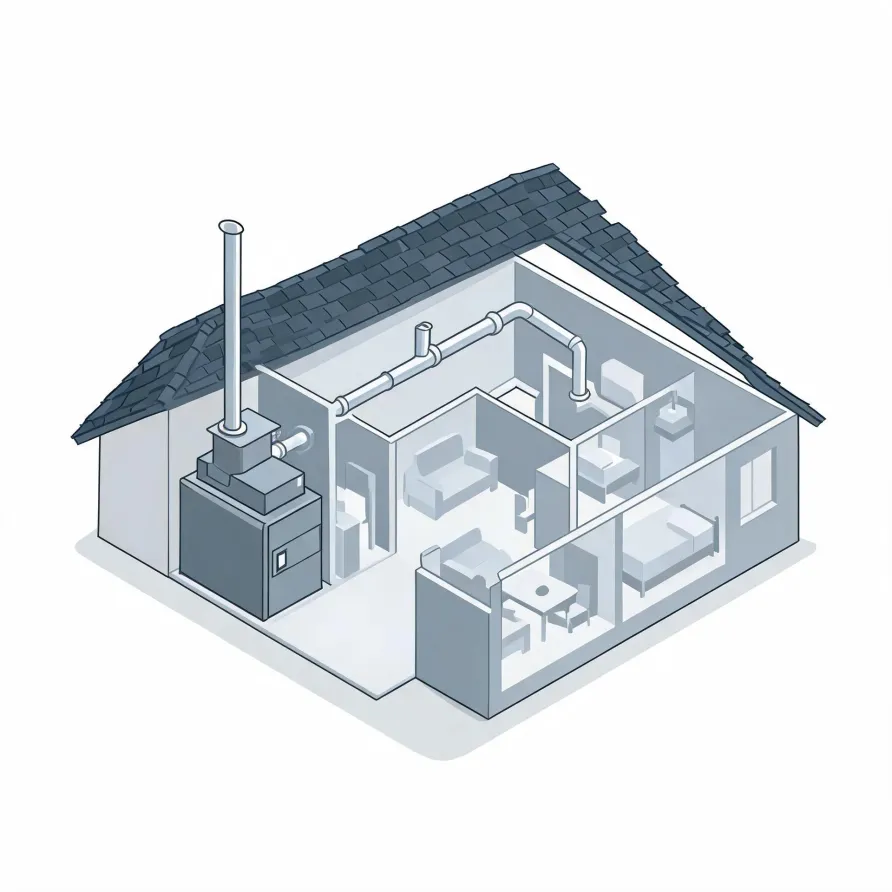
The furnace itself sits in a utility space, basement, or closet and is the heart of the system. Inside it, the heat exchanger, burners, and blower motor each carry a specific job, and when the heat stops or the airflow weakens, a contractor works through each of those components to find which one has failed.
The flue pipe runs from the furnace to an exterior vent and carries combustion gases out of the house. Alongside it, the thermostat on the living space wall and the gas valve and ignitor inside the cabinet are common starting points when the system runs poorly or refuses to start at all.
The drawing shows a typical furnace layout, and a licensed contractor determines which parts and connections apply to your specific system.
Find a contractor in Yavapai CountyYavapai County, by the record
180 severe weather events were recorded in Yavapai County, Arizona between 2015 and 2024.
NOAA National Centers for Environmental Information, Storm Events Database, bulk CSV export, events 2015-01-01 through 2024-12-31.Half the homes in Yavapai County, Arizona were built in 1995 or earlier (2020-2024 ACS 5-year).
U.S. Census Bureau, 2020-2024 American Community Survey 5-Year EstimatesYavapai County, Arizona holds 126,095 housing units (2020-2024 ACS 5-year).
U.S. Census Bureau, 2020-2024 American Community Survey 5-Year EstimatesOwners occupy 75.1% of the occupied homes in Yavapai County, Arizona (2020-2024 ACS 5-year).
U.S. Census Bureau, 2020-2024 American Community Survey 5-Year EstimatesCodes & Standards Governing Furnace Repair in Yavapai County, Arizona5 sourced rules and standards
What happens when a contractor comes out
Non-weatherized gas furnaces manufactured on or after November 19, 2015 must reach 80.0 percent AFUE.
Non-weatherized oil-fired furnaces manufactured on or after November 19, 2015 must reach 83.0 percent AFUE.
Mobile home gas furnaces manufactured on or after November 19, 2015 must reach 80.0 percent AFUE.
Non-weatherized gas furnaces manufactured on or after December 18, 2028 must reach 95.0 percent AFUE, up from the 80.0 percent minimum that applies to units manufactured before that date.
Licensing and Legal Requirements in Yavapai County, Arizona
Arizona requires a contractor licence in good standing: it is unlawful to engage in the business of contracting, to bid, or to act or hold yourself out as a contractor without one.
Severe Weather Events in Yavapai County
Extreme weather puts real stress on furnace components, from heat exchangers to ignition systems, and Yavapai County's climate is its own set of conditions. How hard local weather pushes that equipment shapes what repair work looks like here.
180 severe weather events, 2015–2024. Source: NOAA National Centers for Environmental Information, Storm Events Database.